
Understanding Hearing Aids: A Complete Guide for First-Time Users
Noticing that conversations are becoming harder to follow, especially in crowded places or on the phone? You may be wondering whether hearing aids could help.
Hearing aids are small electronic devices designed to make sounds easier to hear. They can be helpful for many people with hearing loss, but choosing the right device should be based on your type and degree of hearing loss, communication needs and lifestyle. A hearing aid does not restore normal hearing, but it can improve awareness and understanding of sounds.
What Is a Hearing Aid?
A hearing aid is an electronic device that uses a microphone, amplifier and receiver to process and deliver amplified sound to the ear.
Modern digital hearing aids can be programmed and adjusted according to an individual’s hearing needs and different listening environments.
Who May Benefit From Hearing Aids?
Hearing aids may be recommended for people with hearing loss that makes everyday communication difficult.
Common signs include:
- Frequently asking others to repeat themselves
- Difficulty following conversations in groups
- Increasing the TV or phone volume
- Trouble hearing in noisy places
- Difficulty understanding speech even when people are nearby
The first step should be a proper hearing evaluation rather than choosing a hearing aid based only on symptoms. Hearing loss can have different causes, and an ENT specialist can help determine whether there is an underlying ear condition that needs medical treatment.
Types of Hearing Aids
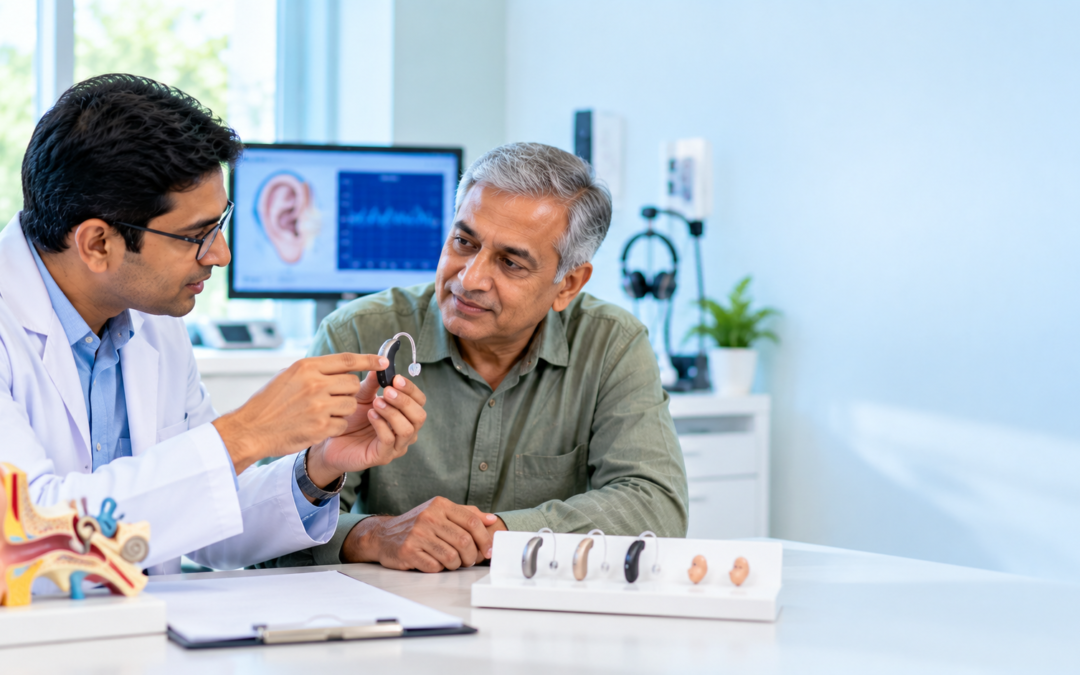
Hearing aids come in different designs. Some sit behind the ear, while others fit partly or completely inside the ear canal.
The suitable type depends on factors such as:
- Degree and type of hearing loss
- Comfort and handling
- Lifestyle
- Listening environments
- Features you actually need
- Budget
A smaller hearing aid is not automatically the right choice. The goal is to find a device that provides suitable hearing support and is comfortable enough to use regularly.
What Happens Before Getting a Hearing Aid?
A hearing evaluation helps identify how much hearing loss is present and what type it is. Your ENT specialist or hearing professional may also examine the ear to rule out problems such as earwax, infection or other conditions that could affect hearing.
After evaluation, the hearing aid can be selected and adjusted according to your hearing requirements.
What Should First-Time Users Expect?
Don’t worry if the hearing aid feels unusual at first.
Some new users notice:
- Their own voice sounds louder
- Background sounds seem more noticeable
- The device feels slightly unfamiliar
- Occasional whistling or feedback occurs
Getting used to hearing aids can take time and regular use. Adjustments by the hearing professional may also be needed to improve comfort and sound quality.
How Should You Care for Your Hearing Aid?
Good maintenance can help keep the device working properly.
Follow the manufacturer’s and hearing professional’s instructions. Keep the device away from excessive moisture and heat, clean it as instructed, and pay attention to earwax or ear drainage because these can interfere with hearing-aid performance.
Should You Buy a Hearing Aid Without a Hearing Test?
It is better not to choose a hearing aid purely based on price, appearance or a friend’s recommendation.
A hearing evaluation can help determine the type and amount of hearing loss and whether a medical condition needs attention first. Hearing aids are not one-size-fits-all devices.
For adults with perceived mild-to-moderate hearing loss, some countries, including the United States, have an over-the-counter category. These devices are not intended for children or people with more severe hearing loss.
When Should You See an ENT Specialist?
An ENT consultation is particularly important when hearing loss is:
- Sudden
- Getting worse
- Associated with ear pain or discharge
- Associated with dizziness
- Associated with persistent tinnitus
- Affecting communication significantly
Sudden hearing changes should be assessed promptly rather than simply buying a hearing aid.
Looking for Hearing Loss Evaluation in Hyderabad?
If you or a family member is having difficulty hearing, the right first step is understanding the cause and degree of hearing loss.
Dr. Shareef, ENT Specialist in Hyderabad, provides evaluation for a range of ear and hearing-related conditions.
If you’re looking for an ENT specialist in Hyderabad or a hearing test in Hyderabad, book a consultation to discuss your symptoms and appropriate hearing-care options.
[Book an Appointment]
Frequently Asked Questions
Can hearing aids restore normal hearing?
No. Hearing aids amplify and process sounds to make them easier to hear; they do not restore normal hearing.
How long does it take to get used to hearing aids?
Adjustment varies from person to person. Regular use and appropriate professional adjustments can help you become more comfortable with the device.
Do I need a hearing test before getting hearing aids?
A hearing evaluation is strongly useful for understanding the type and degree of hearing loss and choosing appropriate hearing support.
Should I wear one or two hearing aids?
When hearing loss affects both ears, two hearing aids are generally recommended because binaural hearing can help with understanding speech and locating sounds. The decision should be individualized.
Can hearing aids help with hearing in noisy places?
They can improve hearing in many listening situations, but they cannot completely eliminate background noise. Proper programming and realistic expectations are important.